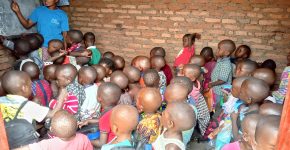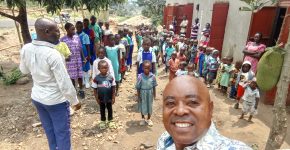
Healthcare is a big challenge to the Ugandan community. With only 38% of healthcare posts filled in Uganda, the country suffers a chronic shortage of trained health workers – about 51% of people don’t have any contact with public healthcare facilities. Many rural Ugandans move a journey of about 20 kilometers to reach a health facility, oftentimes on foot (along roads) with no public transport. In Uganda, sanitation coverage is low; 17% in urban areas and 62% in rural areas – about 54% of households must travel 30 minutes or more to fetch drinking water mainly from unsafe water sources.
The poor are more vulnerable to illnesses because they usually live in unhygienic conditions, have low levels of health awareness, fail to take preventive measures and may not afford to pay for diagnosis and effective treatment.
There is still a desperate need for a medical clinic to provide a much-needed healthcare service. We are also planning to establish a medical clinic that will offer free healthcare services to OVCs and affordable quality health services to the communities; which will include health education, children weight-height monitoring, regular deworming, rapid testing for malaria, HIV/AIDS, syphilis, HCG, Hepatitis, Typhoid, gonorrhea, Candidiasis, diabetes, etc, self-testing kits for the diabetic patients, basic management and referrals for further care to referral facilities. Through the clinic, it will be easy to collaborate with international health professional to organize mobile health interventions, and run family based micro-insurance for the vulnerable people.
Living Word Gospel Care Foundation believes that primary healthcare is a basic human right and recognizes that a healthy population in our local community is essential for growth, development, and prosperity in every society. We believe only ‘healthy people’ can break the poverty cycle. By establishing a strong foundation of healthcare and a solid infrastructure of good health in rural remote communities, we offer a chance to reverse the trend of poverty and create good health and a brighter future.
Lack of Education
According to UNICEF, 1 in 10 school-aged African girls either skip school during menstruation or drop out entirely because of lack of hygiene solutions. A girl who is absent from school for 4 days each month loses 13 learning days, equivalent to 2 weeks of learning in every school term. A girl in primary school (3 years long) loses approximately 18 weeks out of 108 school weeks, while a girl in secondary school (4 years long) loses 156 learning days, equivalent to almost 24 weeks out of 144 weeks of school. This is a clear indication that most our girl children are becoming school dropouts. This absenteeism is the leading cause of poor academic performance and subsequent dropping out of school among girls.
Poverty
Menstrual hygiene health is clearly a neglected issue in our Ugandan and African nature of living, yet it is a basic need for all female. The monthly expenditure for sanitary protection is about 3,500.UGX) analysis states that buying sanitary protection means a monthly spending equivalent of four radio batteries or enough paraffin to last a family for one month. Where men most often control the household budget, how can girls and women succeed in getting sanitary materials on to the priority list? Where sanitary protection for one girl may cost around a tenth of a monthly family monthly income, how can a household afford this where there are 2 or 3 girls?
Our Approach
Living Word Gospel Care Foundation works to ensure that adults, families and young people have access to adequate and accurate information about their bodies and body changes to be able to plan ahead of time for necessary care and also prevent common illnesses i.e. malaria, diarrhea and unwanted pregnancies, sexually transmitted infections including HIV/AIDS, finish education and get out of the poverty trap:
- A health body makes a health mind. We so far give food support to the 53 orphans and 6 widows. Many orphans and widows go hungry and this puts their health at stake to malnutrition, anaemia and some illnesses as a result of impaired immunity due to hunger and hence early deaths.
- We train and do counselling in and out of school youth (at puberty), teachers, and the community (male and female of reproductive age) on legal, sexual and reproductive health and rights including menstrual hygiene management (MHM), spread of sexually transmitted infections (STIs) and HIV/AIDS.
- Working with local leaders, opinion leaders, church leaders and village health teams (VHTs) to challenge practices that may facilitate poor teenage health and the spread of sexually transmitted infections (STIs) and HIV/AIDS.
- Working with women and girls to locally produce and sell reusable sanitary pads, helping training girls and women to make cheaper reusable pads for their own use.
- Conducting sanitary pad distribution actions (donated pads, locally made pads, donor-supported purchased pads).
- Each year, we join the world to celebrate the 28th May as the Menstrual Hygiene Day and the Day of Action for Women’s Health to break the silence and create awareness about the fundamental role that good menstrual hygiene management (MHM) plays in enabling women and girls to reach their full potential and advocate for sexual and reproductive health and rights (SRHR).
- Teaching girls and women soap-making skills (soap is obviously essential not only when reusable sanitary pads are used, but for entire personal hygiene practices).
- Establishing child friendly sanitation facilities in schools (toilets, washrooms, emergency kits, uniforms, pads, knickers, etc).
- Our community health program ensures that all people access adequate, affordable and effective services through 3-fold prolonged approaches; –
Promote Preventative Knowledge
We are educating villagers on specific, pertinent health issues to help them self-diagnose, understand the root causes of diseases and the benefits of seeking early treatment learn clean birth practices, and recognize birth complication warning signs. Because many people use traditional remedies.
We are implementing water, sanitation, and hygiene (WASH program) through which we are supplying water filters and bringing clean water to communities; building appropriate toilets and hand-washing stations in schools; and working on the production and marketing of ‘cheap soap’ as key solutions in breaking the cycles of disease spread.
Promote Demand for Quality Healthcare
We are educating villagers on the right to health and how they can hold their leaders accountable in promoting socio-health issues. We create awareness on the importance of early diagnosis and treatment; mobilize and partner with health facilities to implement community outreaches; we closely engage the village health teams (VHTs) who serve as a referral link between the community and Ugandan health facility; advocate for support to HIV+ people including educating them and their families on new approaches to AIDS management – the Differentiated Service Delivery Model (DSDM); and provide HIV/AIDS patients with transport to access anti – retro viral treatment ART for better health.
Promote Access to Healthcare
One of the problems that diminish the quality of care at public health centres is that they are widespread, lack of equipment and supplies and the shortage of health personnel. These problems have life and death implications for the community members. We aim at partnering with health facilities in providing some equipment and some supplies to strengthen the public sector’s service delivery to thousands of people living in rural areas.